
Empowerment Through Awareness: A Comprehensive Guide to Understanding Preeclampsia
- Samantha Henry
- May 4
- 3 min read
May is Preeclampsia Awareness Month, a crucial time to bring attention to a condition that affects nearly 1 in 20 pregnancies. In the high-acuity world, the word "preeclampsia" often triggers a "Fight or Flight" response, leaving families feeling a sudden loss of autonomy. At Birth and Body Empowerment, we believe that understanding the why behind your physiology is the first step toward reclaiming your "Sanctuary" and becoming a powerful advocate for your birth story.
This guide offers clear, practical information about preeclampsia, its symptoms, and how to navigate care with a mindset that supports both safety and empowerment.

The "Why" Behind the Clinical Picture
Preeclampsia is more than just high blood pressure during pregnancy. It is a complex condition that affects multiple systems in the body, primarily involving the placenta and maternal blood vessels. This disorder can impact the liver, kidneys, brain, and other organs, making it a serious concern for both mother and baby.
Understanding the underlying causes helps reduce fear. Preeclampsia develops when the placenta does not form properly or when blood vessels do not adapt as they should during pregnancy. This leads to changes in blood flow and can cause symptoms that signal the need for medical attention.
Recognizing Your Body’s "Safety Signals"
Knowing your body and recognizing early warning signs can make a significant difference. The following symptoms are important "safety signals" to monitor:
Persistent Headache
A headache that does not improve with hydration, rest, or over-the-counter pain relief like Tylenol.
Visual Changes
Experiencing spots, stars, or blurred vision.
Upper Right Quadrant Pain
A dull or sharp pain just below the ribs on the right side, where the liver is located.
Sudden Swelling
While some swelling is normal during pregnancy, sudden puffiness in the face and hands can indicate a problem.
If you notice any of these symptoms, contact your healthcare provider promptly. Early detection allows for timely intervention, which can improve outcomes.
How Clinical Care Supports You
When diagnosed with preeclampsia, your care plan may change. You might be advised to deliver your baby early or receive medications like Magnesium Sulfate to prevent seizures. These treatments are designed to protect both you and your baby.
In many hospitals, receiving Magnesium Sulfate often means bed rest. This can feel restrictive, but there are ways to maintain comfort and support your body’s natural processes even with limited movement.

Maintaining Your Sanctuary with Biomechanics
Even when movement is limited, you can use specific positions and tools to help keep your baby in an optimal position and support your body’s needs. The Birth and Body Empowerment (BBE) team recommends techniques such as:
Using the Peanut Ball for the Passive Flip
This helps open the pelvic inlet gently without requiring active movement.
The BBE Pivot: Knowledge as an Oxytocin Anchor
When you understand the "why" behind the protocol—like how Magnesium Sulfate protects your nervous system—your brain can move out of a stress state and back into a rest-and-digest state. This lowers adrenaline, which is the ultimate "Labor Killer," and allows your natural Oxytocin to keep working.
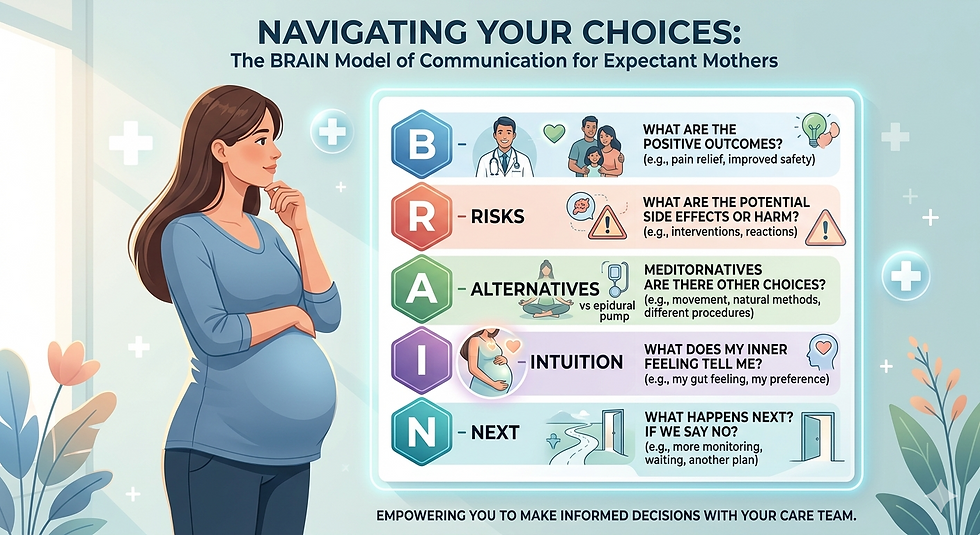
Being informed means you aren’t just a patient—you are the primary stakeholder in your care. Use your BRAIN (Benefits, Risks, Alternatives, Intuition, Next) and remember: your Sanctuary isn't a place; it's a mindset you carry with you into the delivery suite.
Moving Forward with Confidence
Preeclampsia can feel daunting, but knowledge is a powerful tool. By recognizing symptoms early, understanding your care plan, and using supportive biomechanics, you can navigate this condition with greater confidence.
Remember, your healthcare team is there to support you, and you have the right to be informed and involved in every step. Empowerment comes from awareness and active participation in your health journey.
If you or someone you know is pregnant, take time this May to learn about preeclampsia. Share this knowledge, watch for the safety signals, and cultivate a sanctuary mindset that fosters strength and calm at every stage of pregnancy.
Evidence-Based Resources for Your Journey
The Preeclampsia Foundation: preeclampsia.org – The leading resource for patient education and latest research.
ACOG (American College of Obstetricians and Gynecologists): Practice Bulletin No. 222: Gestational Hypertension and Preeclampsia – The clinical gold standard for diagnosis and management.
AWHONN (Association of Women's Health, Obstetric and Neonatal Nurses): Preeclampsia Evidence-Based Clinical Practice Guideline – Resources focused on the nursing care and monitoring of preeclamptic patients.
Clinical Disclaimer: This guide is provided for educational and empowerment purposes only as part of the Birth and Body Empowerment mission. It is not intended to replace the medical advice, diagnosis, or treatment from your professional healthcare team. Always seek the care of your doctor or midwife for any questions or concerns regarding your specific health and pregnancy.


Comments